Starting your scuba diving journey with a PADI Open Water certification opens up an entirely new world beneath the surface. As the most recognized diving qualification globally, padi open water diving certification allows you to explore underwater environments to 18 meters independently alongside a dive buddy. Whether you’re planning to dive the vibrant reefs of El Nido or explore shipwrecks around the world, this entry-level course provides the foundation for a lifetime of underwater adventure. The training combines theoretical knowledge, confined water practice, and real-world open water dives to ensure you’re confident and safe from your very first breath underwater.
Understanding the PADI Open Water Course Structure
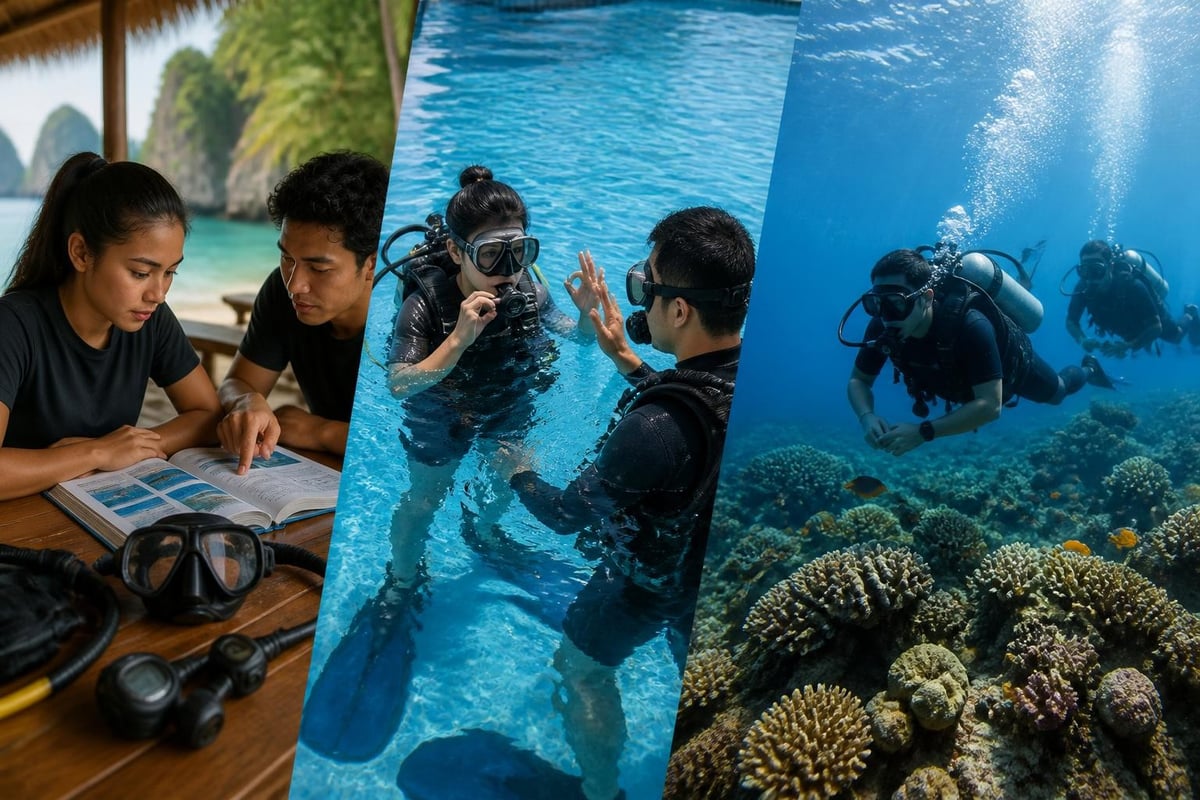
The padi open water diving course follows a proven three-phase approach designed to build your skills progressively. You’ll start with knowledge development covering diving theory, physics, physiology, and safety procedures. This phase can be completed through traditional classroom sessions, self-study with the PADI manual, or the flexible eLearning platform that lets you work at your own pace before arriving at your dive destination.
Knowledge Development Components
During the academic portion, you’ll master five main knowledge sections:
- Section One: Introduction to diving equipment, basic dive planning, and the buddy system
- Section Two: Understanding pressure effects, nitrogen absorption, and safe diving practices
- Section Three: The aquatic environment, marine life interaction, and boat diving procedures
- Section Four: Dive tables, decompression theory, and multilevel diving concepts
- Section Five: Advanced equipment configurations and dive computer fundamentals
Each section concludes with a knowledge review, and you’ll complete a comprehensive final exam requiring 75% to pass. The NOAA Diving Standards & Safety Manual provides additional context on why standardized training protocols matter for diver safety across recreational and professional contexts.
Confined Water Training Sessions
The confined water portion consists of five pool or calm-water sessions where you’ll practice fundamental skills in a controlled environment. These sessions build muscle memory and confidence before venturing into open water.
| Session | Primary Skills | Equipment Focus |
|---|---|---|
| Session 1 | Regulator breathing, mask clearing, buoyancy introduction | BCD inflation/deflation, weight adjustment |
| Session 2 | Regulator recovery, alternate air source use | Instrument reading, compass basics |
| Session 3 | Controlled emergency ascents, no-mask breathing | Tank pressure monitoring, dive planning |
| Session 4 | Underwater navigation, surface swimming | Complete pre-dive safety checks |
| Session 5 | Skills integration, scenario-based practice | Full equipment assembly/disassembly |
In El Nido’s warm, clear waters, confined water sessions often take place in protected shallow bays where visibility allows you to see everything your instructor demonstrates.
Essential Skills Every Open Water Diver Must Master
Padi open water diving certification requires demonstrating competency in 20 core skills performed in various combinations across your confined and open water dives. These aren’t arbitrary requirements but proven safety fundamentals developed through decades of diving education.
Mask skills form the foundation of diver comfort. You’ll practice partial and complete mask clearing, mask removal and replacement, and even swimming short distances without a mask. These skills eliminate the anxiety many beginners feel about water near their face.
Regulator skills ensure you can always access air. You’ll learn regulator recovery techniques (sweep and reach methods), clearing techniques (blast and purge methods), and switching to your alternate air source. Practicing controlled breathing from a free-flowing regulator prepares you for equipment malfunctions.
Buoyancy control separates confident divers from struggling ones. Through weight adjustment, BCD operation, and breathing techniques, you’ll learn to hover motionless at any depth. This skill protects delicate coral reefs and reduces air consumption significantly.
Research from Divers Alert Network indicates that inadequate buoyancy control contributes to many recreational diving incidents, emphasizing why PADI dedicates substantial training time to this skill.
Emergency and Safety Procedures
Understanding how to handle problems underwater builds the confidence needed for independent diving:
- Controlled Emergency Swimming Ascent (CESA): Performing a safe ascent while air-sharing or during air depletion
- Alternate Air Source Use: Both donating and receiving air from a buddy
- Weight System Removal: Ditching weights at the surface in an emergency
- Equipment Removal and Replacement: Managing gear problems while underwater
- Cramp Release: Self-rescue and buddy-assistance techniques
You’ll practice these scenarios multiple times until they become second nature. The goal isn’t to scare you but to ensure you can handle minor problems before they escalate.
Open Water Certification Dives in Real Conditions
The final phase involves four open water dives conducted over two days minimum. These dives apply everything you’ve learned in actual diving environments, progressing from shallow protected sites to more varied conditions.
Dive One and Two typically occur at shallow sites (maximum 12 meters) where you’ll repeat and refine confined water skills. Instructors select locations with minimal current, good visibility, and interesting features to make skill practice engaging rather than tedious.
Dive Three and Four venture slightly deeper (maximum 18 meters for Open Water students) and incorporate navigation exercises, dive planning, and exploration. These dives feel less like training and more like real diving adventures.
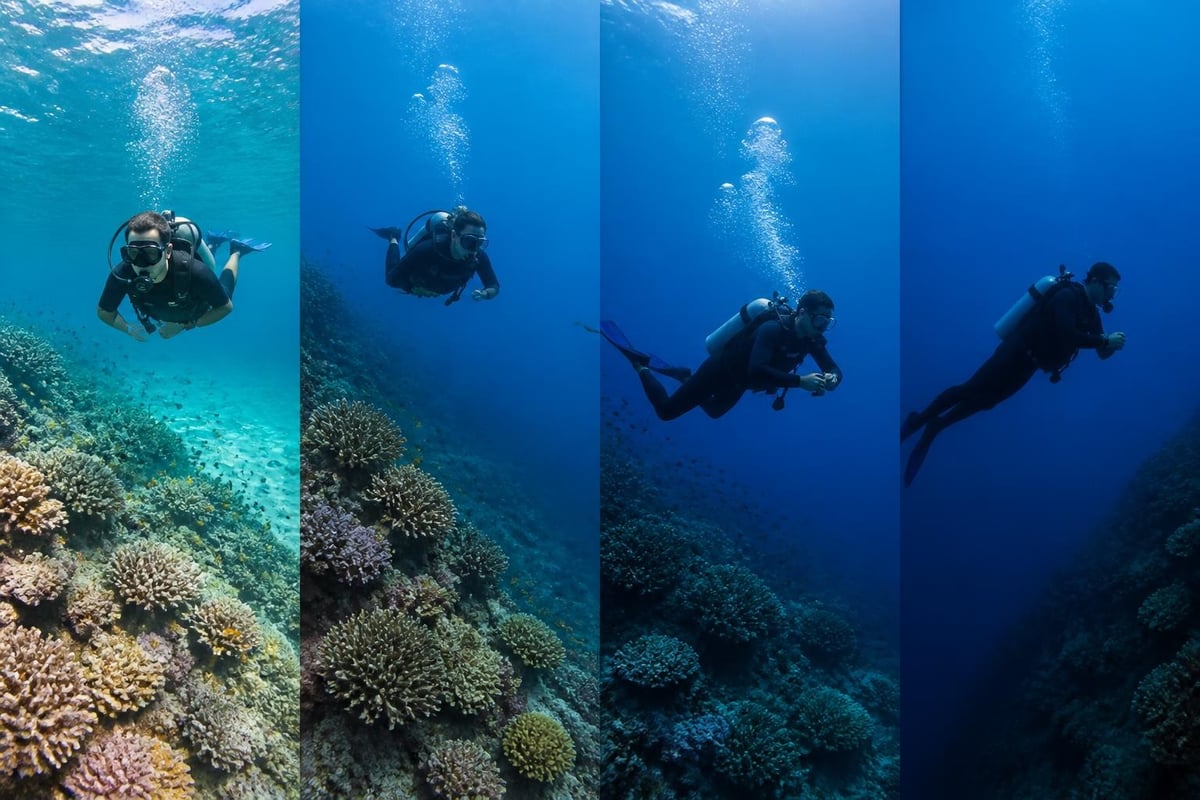
In El Nido, certification dives often take place at sites featuring healthy coral gardens, swim-throughs, and abundant marine life. The warm 27-29°C water temperature and typical 15-25 meter visibility create ideal learning conditions. You might complete skills surrounded by schools of fusiliers or practice navigation along walls decorated with soft corals and anemones.
For those ready to start their certification journey in these exceptional conditions, the Open Water Diver Course at Submariner Diving Center combines professional instruction with small class sizes, ensuring personalized attention throughout your training.
Prerequisites and Health Considerations
Padi open water diving requires no prior diving experience, but you must meet certain prerequisites before enrollment. You need to be at least 10 years old (with junior certification depth limits) or 15 for full certification to 18 meters.
Medical Screening Requirements
PADI requires all students to complete a medical questionnaire before course enrollment. If you answer “yes” to any medical questions, you’ll need physician clearance before diving. Common conditions requiring medical approval include:
- Asthma or current respiratory conditions
- Heart disease, previous heart surgery, or irregular rhythms
- Diabetes (requires specialized evaluation)
- Epilepsy or seizure disorders
- Ear problems or perforated eardrums
The European Underwater and Baromedical Society provides physician guidance on diving medical assessments and fitness-to-dive determinations. Don’t skip this step or provide inaccurate information, as certain conditions create serious risks underwater.
Swimming ability represents another essential prerequisite. You must demonstrate reasonable water comfort by completing a 200-meter continuous swim (or 300 meters with mask, fins, and snorkel) plus a 10-minute float or tread. These aren’t competitive standards but basic water confidence indicators.
Course Duration and Time Commitment
Traditional padi open water diving courses require 3-4 days for completion, though the exact timeline depends on your learning pace and chosen knowledge development method.
| Course Component | Typical Duration | Flexible Options |
|---|---|---|
| Knowledge Development | 8-12 hours | Complete eLearning before arrival |
| Confined Water Training | 6-8 hours (5 sessions) | Usually 2 days, sometimes 3 |
| Open Water Dives | 2 days (4 dives) | Consecutive days or split schedule |
| Total Course Time | 3-4 days | 2.5 days with eLearning completed |
Completing PADI eLearning before your trip reduces classroom time significantly. You arrive ready for water sessions, maximizing your dive time and potentially finishing certification faster. This option particularly suits travelers with limited vacation days.
Some students need extra time for specific skills. Quality dive centers never rush students through training just to meet arbitrary schedules. Your instructor will ensure you’re truly competent before signing your certification, even if it requires additional practice dives.
What to Expect During Your First Open Water Dive
Your first real ocean dive creates memories that last forever. Understanding what happens helps manage pre-dive nerves and lets you focus on the experience rather than worrying about procedures.
Pre-dive preparation begins on the boat or shore with a thorough dive briefing. Your instructor explains the dive site layout, planned maximum depth, entry and exit procedures, and what you’ll see underwater. You’ll review hand signals and establish emergency protocols.
During gear assembly, your instructor verifies every piece of equipment before you enter the water. This buddy check becomes routine for all future dives but receives extra attention during certification.
Entry procedures vary by dive site. You might stride off a boat platform, back-roll from a small boat gunwale, or walk in from a beach. Your instructor demonstrates first, then assists as you enter. Initial nerves are completely normal.
Once underwater, you’ll descend slowly along a reference line or the reef wall, equalizing your ears every meter or so. Understanding nitrogen narcosis risks, even at shallow depths, helps you recognize normal sensations versus concerning symptoms during your first deeper dives.
The skills portion occupies the first part of your dive. After completing required demonstrations, the remainder becomes pure exploration. This transition from student to diver represents the magical moment when everything clicks.
Understanding Depth Limits and Progression
Your padi open water diving certification authorizes diving to 18 meters (60 feet) maximum. This limit isn’t arbitrary but based on nitrogen narcosis research, decompression safety margins, and your training experience level.
Why Depth Limits Matter
Deeper diving introduces additional complexity:
- Increased nitrogen absorption requiring careful ascent planning
- Greater narcosis potential affecting judgment
- Faster air consumption reducing available bottom time
- More significant pressure changes during ascent
- Decreased light levels and color spectrum changes
The comprehensive overview of decompression illness published in Diving and Hyperbaric Medicine explains the physiological basis for depth-related risks that recreational training addresses through progressive certification.
Continuing education removes these limits responsibly. The Advanced Open Water course introduces you to deeper diving (maximum 30 meters) with proper training in navigation, deep diving procedures, and specialty skills. This progression ensures you develop experience gradually rather than exceeding your training immediately after certification.
Post-Certification Opportunities and Adventures
Earning your padi open water diving certification represents the beginning rather than the end of your diving journey. The qualification unlocks access to thousands of dive sites worldwide and opens pathways to specialized diving activities.
Immediate diving opportunities include exploring local reefs, participating in guided dive trips, and joining the global diving community. Your C-card (certification card) grants access to dive centers, equipment rental, and boat charters anywhere in the world.
Specialty Course Options
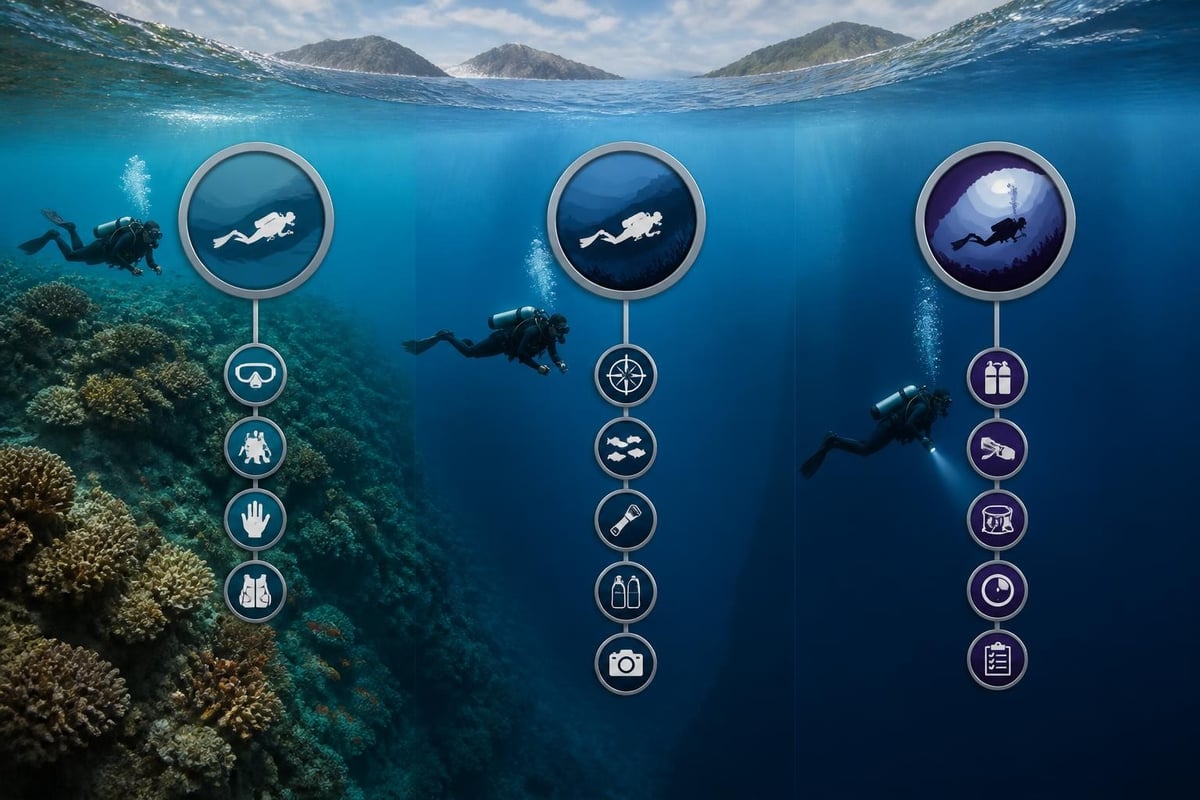
PADI offers over 20 specialty courses that enhance specific skills or introduce new diving environments:
- Peak Performance Buoyancy: Master the most important diving skill through focused practice
- Underwater Navigation: Develop precision compass and natural navigation abilities
- Deep Diver: Safely extend your depth range to 40 meters
- Wreck Diver: Learn proper wreck penetration and exploration techniques
- Nitrox Diver: Use enriched air for longer bottom times and shorter surface intervals
- Night Diver: Experience the reef’s dramatic transformation after sunset
Many divers discover that their favorite specialty becomes an unexpected passion. Someone certified simply to join family vacations might become an enthusiastic underwater photographer or marine conservation advocate.
Exploring beyond basic certification often starts with local diving opportunities. The diverse marine environments around Palawan provide perfect venues for building experience across different conditions and developing specialties from coral identification to underwater photography.
Equipment Needs and Investment Considerations
During your padi open water diving course, the dive center provides all necessary equipment. However, many newly certified divers wonder about personal gear purchases.
Immediate personal gear worth considering includes:
- Mask and snorkel: Personal fit matters tremendously for comfort
- Fins: Matched to your fitness level and diving style
- Exposure protection: Wetsuit or rashguard suited to your typical diving temperatures
- Dive computer: Essential for dive planning and surface interval tracking
Major equipment like regulators, BCDs, and tanks typically remain rental items initially. These represent significant investments ($1,500-$3,000 for quality gear) better made after you’ve gained experience and identified your diving preferences.
Rental equipment at professional dive centers undergoes regular servicing and safety inspections. There’s no shame in renting, regardless of experience level. Many advanced divers rent when traveling rather than transporting bulky equipment internationally.
Safety Practices and Continuing Education
Safe diving extends beyond initial certification training. Developing good habits from your first dives establishes practices that protect you throughout your diving career.
Pre-dive planning should become automatic. Before every dive, review:
- Maximum planned depth and bottom time
- Required surface interval since your last dive
- Environmental conditions (current, visibility, temperature)
- Buddy communication and emergency procedures
- Entry, exit, and emergency contact points
The AAUS Scientific Diving Standards Manual demonstrates how professional diving operations approach systematic dive planning, offering useful perspective for recreational divers seeking to improve their pre-dive protocols.
Stay current with regular diving. Skills deteriorate surprisingly quickly. If you haven’t dived in six months or more, consider a refresher session before returning to open water. This isn’t admission of inadequacy but responsible diving practice.
Log your dives diligently. Your logbook documents experience, helps you remember favorite sites, tracks equipment configurations, and serves as proof of recent diving for advanced course enrollment or exotic destination diving.
Common Challenges and How to Overcome Them
Every padi open water diving student faces obstacles during training. Understanding common challenges helps you recognize that difficulties don’t indicate failure but represent normal parts of the learning process.
Ear equalization troubles affect many beginners. Some people equalize easily while others need to descend very slowly, equalizing every half meter. If standard techniques don’t work, your instructor can teach alternative methods like the Frenzel maneuver or Toynbee maneuver. Diving with a cold or sinus congestion makes equalization nearly impossible, so never force it.
Mask clearing anxiety stems from instinctive discomfort with water near your face. The solution involves gradual exposure, starting with small amounts of water and building confidence through repetition. Some students need extra confined water sessions specifically for mask skills, and that’s perfectly acceptable.
Buoyancy frustration is universal among beginners. You might feel like you’re constantly fighting to maintain depth, ascending when you want to stay level or sinking when you try to hover. This skill requires time and practice. Even after certification, you’ll continue refining buoyancy control for years.
Air consumption concerns worry students who empty their tanks much faster than their instructor or buddy. New divers typically use air 2-3 times faster than experienced divers due to elevated heart rates, inefficient swimming, and anxiety. Consumption improves dramatically with experience and confidence.
If you’re struggling with any aspect of training, communicate openly with your instructor. They’ve seen every challenge imaginable and can provide targeted coaching or additional practice sessions.
Diving Etiquette and Environmental Responsibility
Your padi open water diving training includes environmental awareness, but developing strong conservation ethics requires ongoing commitment beyond certification.
Reef Protection Fundamentals
Never touch marine life or coral formations. What appears stable and rock-like actually consists of living organisms that decades to grow. A single hand placement can destroy years of coral growth.
Perfect your buoyancy to avoid accidental reef contact. Your fins cause the most damage, so maintain awareness of your body position in the water column.
Avoid feeding fish despite its popularity at some tourist sites. Feeding disrupts natural behaviors, creates dependency, and attracts aggressive species to swimming areas.
Remove nothing except trash (which you should collect when safe). Shells, sand, and coral fragments belong in the ecosystem. Many destinations enforce strict penalties for removing natural materials.
Follow dive briefings carefully. Your guide knows which areas can handle diver traffic and which require extra caution. Designated routes and holding points minimize collective impact.
Environmental stewardship separates responsible divers from tourists who happen to breathe underwater. The diving community increasingly embraces conservation, and your choices matter.
Weather and Seasonal Considerations for Training
While padi open water diving occurs year-round in tropical destinations, weather affects training quality and enjoyment significantly.
Water temperature influences exposure protection needs and training comfort. El Nido’s water remains warm (27-29°C) throughout the year, requiring only thin wetsuits or rashguards. Colder destinations might require thicker exposure protection that affects buoyancy and mobility during training.
Visibility varies seasonally in most locations. Better visibility (15-30 meters) makes learning easier since you can clearly see instructor demonstrations and environmental features. Poor visibility (under 10 meters) doesn’t prevent training but increases difficulty.
Surface conditions determine whether training dives proceed as scheduled. Rough seas create challenging entry and exit conditions, seasickness risks, and safety concerns. Professional dive centers reschedule rather than conducting training in marginal conditions.
The dry season (November through May) generally offers the most stable conditions throughout the Philippines, though diving remains excellent year-round with proper site selection.
Starting your padi open water diving certification represents the first step into a lifetime of underwater exploration and marine discovery. The training might feel overwhelming initially, but thousands of people successfully earn their certification every week using PADI’s proven educational system. If you’re ready to begin your diving journey in crystal-clear tropical waters surrounded by vibrant reefs and abundant marine life, Palawan Diving offers world-class instruction, small class sizes, and unforgettable training conditions in El Nido. Their experienced instructors ensure you develop solid skills and genuine confidence, preparing you for diving adventures anywhere in the world.