Dive to Dive: Maximizing Your Time in El Nido
When you travel thousands of miles to reach El Nido’s spectacular underwater world, you want to make every moment count. The phrase dive to dive describes the approach many experienced divers take: planning their days to maximize underwater time while respecting crucial safety intervals. This strategy transforms a diving holiday from a few scattered dives into an immersive exploration of Palawan’s remarkable marine environments. Understanding how to properly structure dive to dive days allows you to see more sites, encounter diverse marine life, and truly experience the breadth of what El Nido offers beneath the surface.
Understanding Surface Intervals Between Dives
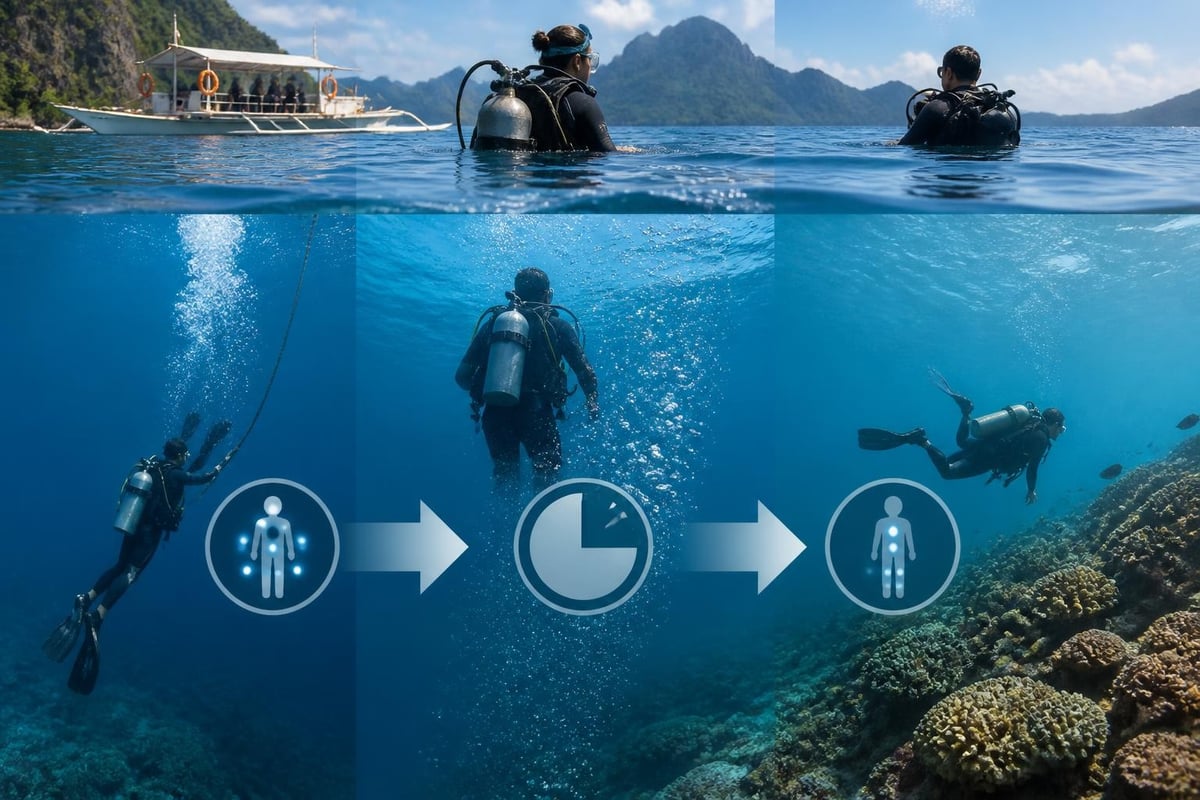
The time between your first dive and your next represents more than just waiting around on the boat. Surface intervals serve critical physiological functions that keep you safe while allowing you to plan multiple dives in a single day.
Why surface intervals matter:
- Allow nitrogen absorbed during diving to off-gas from your body
- Reduce decompression sickness risk on subsequent dives
- Give you time to rehydrate, refuel, and prepare equipment
- Provide opportunities to move between dive sites
Most dive operators in El Nido structure their days with minimum surface intervals of 60 to 90 minutes. This timing isn’t arbitrary. It balances safety requirements with practical considerations like travel time between sites and meal breaks.
Planning Your Dive Profiles
When you’re thinking dive to dive, the order and depth of your dives becomes strategically important. The general rule: go deep first, then shallow.
| Dive Sequence | First Dive | Second Dive | Third Dive |
|---|---|---|---|
| Recommended Depths | 18-30 meters | 12-20 meters | 8-15 meters |
| Bottom Time | 35-45 minutes | 40-50 minutes | 45-60 minutes |
| Nitrogen Loading | Highest | Moderate | Lowest |
This progressive approach minimizes nitrogen accumulation across your dive day. If you dive shallow first and deep later, you significantly increase decompression risk. Your dive computer tracks this automatically, but understanding the principle helps you plan better dive to dive schedules.
Structuring Multi-Dive Days in El Nido
El Nido’s dive sites cluster in different areas around the archipelago. Smart dive to dive planning considers both safety and geography.
A typical three-dive day might start at South Miniloc with its dramatic walls and swim-throughs at 25 meters. After your surface interval, you move to Nat Nat Beach for a shallower reef exploration at 15 meters. The final dive could be at Helicopter Island’s gentle slopes at 10 meters, perfect for extended bottom time and a relaxed end to your day.
Benefits of clustered site planning:
- Reduced boat travel time means more diving
- Similar marine ecosystems let you appreciate subtle differences
- Conditions remain consistent throughout the day
- Less fuel consumption benefits the environment
The boat ride between sites naturally extends your surface interval. A 20-minute cruise to your next location adds valuable off-gassing time while letting you enjoy El Nido’s stunning limestone scenery above water.
Meal Planning and Hydration
Your body needs fuel to function properly during dive to dive days. Dehydration significantly increases decompression sickness risk, yet many divers don’t drink enough water between dives.
Surface interval nutrition guidelines:
- Drink at least 500ml of water between each dive
- Choose light, easily digestible snacks over heavy meals
- Avoid alcohol until all diving is complete
- Include fruits with high water content like watermelon or oranges
Most El Nido dive boats provide fresh fruit, sandwiches, and plenty of drinking water. Take advantage of everything offered. Your body works hard underwater, and proper nutrition directly affects your safety and enjoyment.
Equipment Considerations for Multiple Dives
When you’re planning dive to dive schedules, equipment reliability becomes paramount. You don’t want gear failures interrupting your carefully planned day.
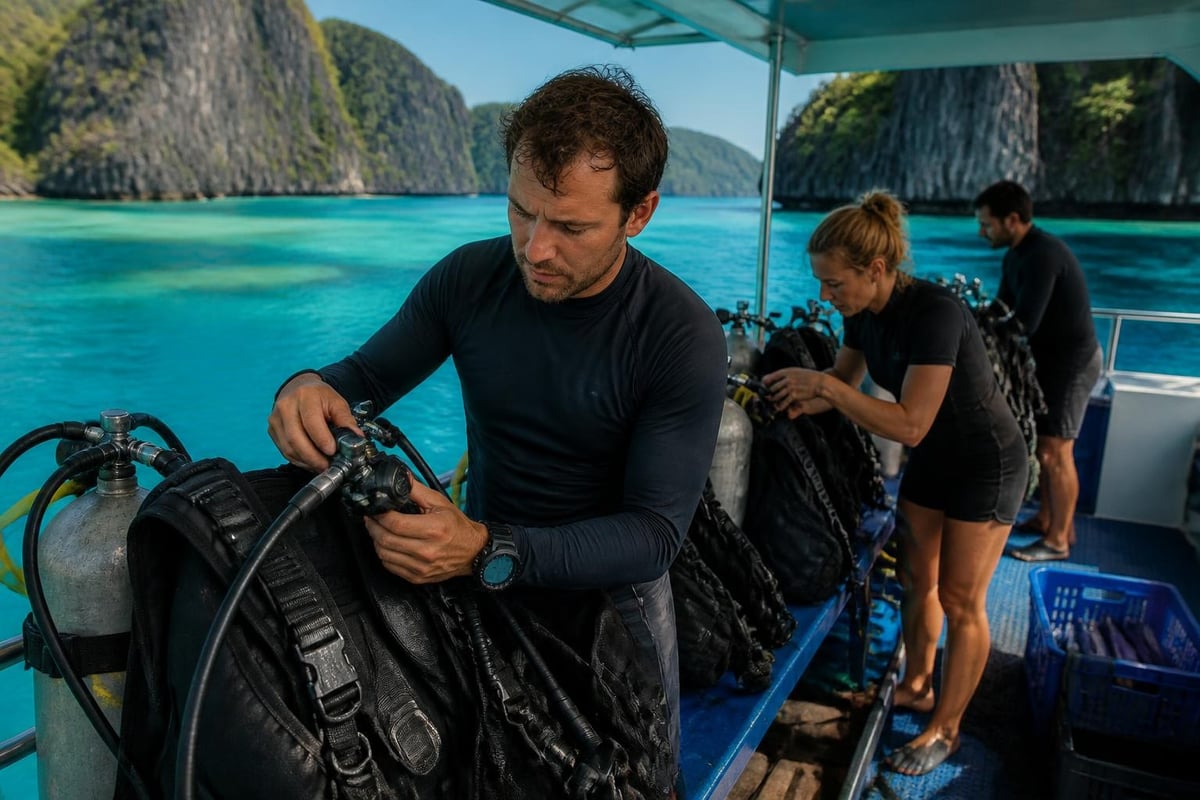
Before your first dive, thoroughly check all equipment. Between dives, conduct abbreviated but focused inspections. Look for o-ring damage, check tank pressure, ensure your dive computer is functioning, and verify regulator performance.
Between-dive equipment checklist:
- Rinse regulators with fresh water
- Check remaining air supply
- Inspect BCD for leaks or damage
- Verify dive computer battery and settings
- Test backup lights and safety devices
Many divers carry spare parts for common failures: extra masks, backup dive computers, additional cutting tools. When you’re committed to a dive to dive approach, redundancy provides peace of mind.
Battery Life and Dive Computer Management
Modern dive computers track multi-dive profiles automatically, but you need to understand what they’re showing you. Your computer calculates nitrogen loading across all dives, applying specific algorithms to determine safe limits for subsequent dives.
Never turn off your dive computer between dives. It must track your entire surface interval to accurately calculate your residual nitrogen. If the battery dies or you switch computers mid-day, you’ve lost critical safety data for planning your next dive to dive sequence.
Choosing the Right Dive Package
For travelers wanting to maximize their underwater time, structured dive packages make excellent sense. Rather than booking individual dives, packages let you commit to a dive to dive approach for multiple days.
Three-day and five-day packages typically offer better value and guaranteed boat spots during high season. You’re also working with the same dive guides who learn your skill level, air consumption rate, and interests. This familiarity improves every aspect of your diving experience. When you’re ready to experience El Nido’s best dive sites with expert guidance and top-quality equipment, the team at Palawan Diving can help you choose the perfect package for your skills and schedule.
Package advantages:
- Reduced per-dive cost
- Priority booking during busy periods
- Consistent dive team and boat
- Flexible scheduling within your travel dates
Advanced Techniques for Experienced Divers
If you hold advanced certifications and want to push your dive to dive capabilities further, nitrox diving opens new possibilities. Enriched air nitrox contains higher oxygen percentages than regular air, reducing nitrogen absorption.
With nitrox, you can:
- Extend bottom times on shallower second and third dives
- Reduce surface interval requirements
- Lower overall fatigue across multi-dive days
- Increase safety margins on all dives
El Nido operators offer nitrox fills and certification courses. The investment pays dividends when you’re planning ambitious dive to dive schedules across a week-long trip.
Deep Diving and Technical Considerations
Some of El Nido’s most spectacular sites require deeper diving. The South Miniloc Wall drops beyond 40 meters, while Dilumacad Tunnel’s deepest sections reach similar depths.
If you want to include deep dives in your dive to dive planning, they must come first. Deep dives create significant nitrogen loading that affects all subsequent dives that day. Plan conservatively, extend your surface intervals, and consider limiting yourself to two dives when one exceeds 30 meters.
| Dive Day Type | Maximum Depth | Number of Dives | Minimum Surface Intervals |
|---|---|---|---|
| Standard recreational | 18-25m | 3-4 dives | 60-90 minutes |
| One deep dive | 30-40m | 2-3 dives | 90-120 minutes |
| Multiple deep dives | 25-35m | 2 dives | 120+ minutes |
Environmental Factors Affecting Dive Scheduling
El Nido’s conditions vary throughout the day, influencing how you structure dive to dive sequences. Morning dives typically offer better visibility and calmer seas. Afternoon conditions can deteriorate as winds pick up, particularly during the northeast monsoon season from November through March.
Optimal timing for different sites:
- North sites: Best visibility 8am to 11am
- South sites: Often better in afternoon when north winds settle
- Protected bays: Consistent conditions throughout the day
- Drift dives: Plan around tidal changes for optimal currents
Current patterns also shift between dives. A site with gentle flow during your morning dive might have ripping current by afternoon. Experienced dive guides factor these changes into multi-dive planning, ensuring each dive to dive sequence remains safe and enjoyable.
Weather Monitoring and Flexibility
Even with perfect planning, weather sometimes forces changes to your dive to dive schedule. Tropical squalls appear quickly in Palawan. Smart divers maintain flexibility in their plans.
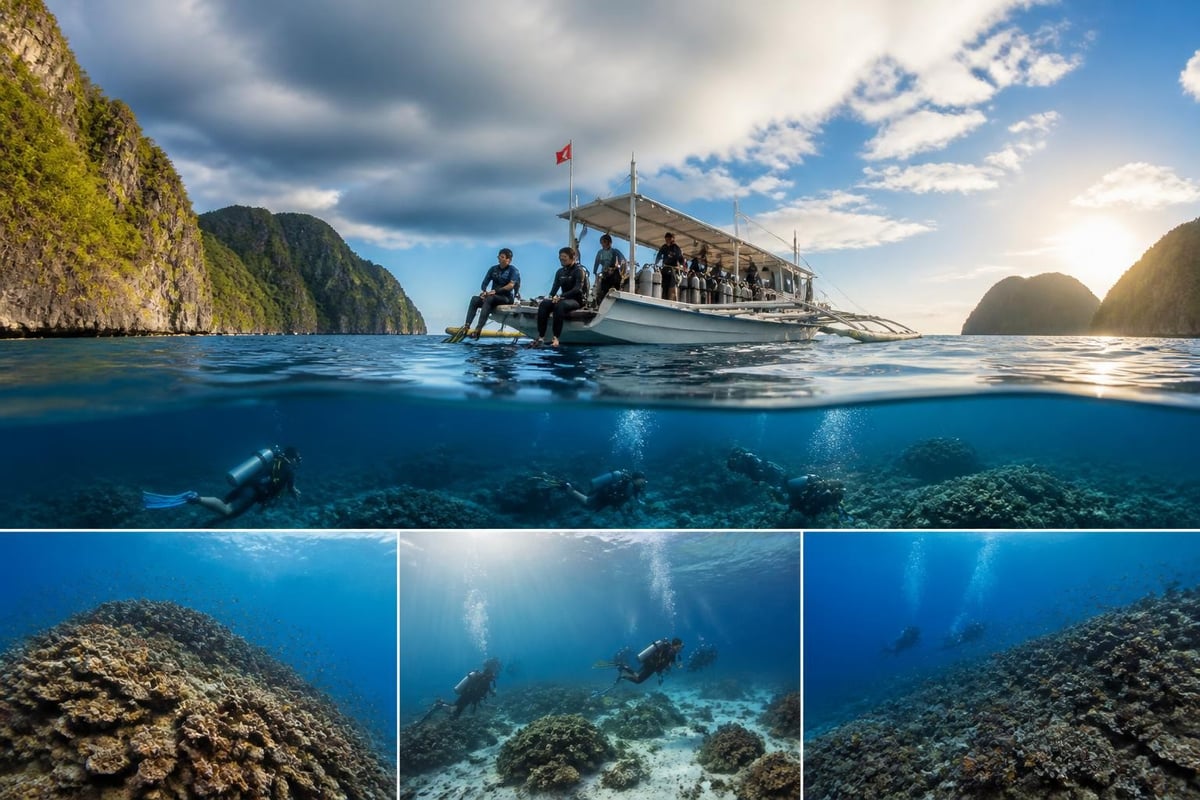
If conditions deteriorate at your planned second site, good operators have alternative locations ready. Protected bays like Cadlao Lagoon offer excellent diving when outer sites become too rough. This adaptability keeps your dive day productive regardless of weather changes.
Fatigue Management Across Multiple Days
A single dive to dive day requires energy, but what about five consecutive days of three-dive schedules? Physical and mental fatigue accumulates faster than many divers expect.
Signs you need a rest day:
- Increased air consumption rates
- Difficulty concentrating during dive briefings
- Slower reaction times underwater
- General exhaustion despite adequate sleep
- Loss of enthusiasm for diving
Professional dive guides watch for these signs in their groups. Don’t feel pressured to dive every single day of your trip. Taking one rest day mid-week actually improves your diving on remaining days. Use rest days to explore El Nido’s beaches, lagoons, and island-hopping opportunities.
Sleep and Recovery
Quality sleep directly impacts your safety and enjoyment during dive to dive schedules. Your body needs time to fully off-gas nitrogen and recover from the physical demands of diving.
Aim for at least eight hours of sleep each night during diving holidays. Avoid late nights and alcohol when you’re planning early morning dives. The combination of alcohol consumption and diving increases decompression illness risk, even when you wait until the next day to dive.
Maximizing Dive Experiences Without Rushing
The dive to dive mentality shouldn’t mean rushing through sites just to tick boxes. Quality matters more than quantity. A thoughtful approach balances maximizing underwater time with truly experiencing each location.
Spend extra minutes watching that cleaning station where wrasses service groupers. Follow that turtle a bit longer. Examine the tiny nudibranchs hidden in reef crevices. The best diving memories come from engaged observation, not from racing through sites to fit in one more dive.
Mindful diving practices:
- Move slowly and breathe calmly to extend bottom time
- Focus on specific subjects rather than covering maximum distance
- Take time for photography when opportunities arise
- Communicate interesting finds to your buddy
- Surface with air to spare rather than pushing safety limits
Training and Skill Development
If you’re new to planning dive to dive days, consider building up gradually. Start with two-dive days, then progress to three-dive schedules as your experience and comfort grow.
Additional training helps too. The Advanced Open Water course teaches deep diving, navigation, and other skills that directly improve multi-dive planning abilities. Rescue Diver training builds awareness that makes you a more self-sufficient diver during long days on the water. For comprehensive dive information and course details, visit the main Submariner Diving Site.
Buddy Skills and Communication
Your buddy relationship becomes crucial during extended dive to dive schedules. You’re spending hours together underwater across multiple sites. Effective communication, shared responsibility, and compatible diving styles make everything better.
Before your first dive, discuss air consumption expectations, comfort levels with different conditions, and how you’ll handle various scenarios. Review hand signals and agree on maximum depths. This upfront communication prevents misunderstandings when you’re 20 meters down with limited communication options.
Practical Logistics for Multi-Dive Days
The operational details matter when you’re committed to dive to dive schedules. What time does the boat leave? Where do you store personal belongings? How do you prevent seasickness during long days on the water?
Most El Nido dive boats depart between 7am and 8am for full-day trips. Arrival 30 minutes early allows time for equipment setup and briefings without rushing. Bring sun protection, seasickness medication if needed, and a dry bag for valuables.
Items to bring on multi-dive days:
- Extra swimwear for staying dry between dives
- Reef-safe sunscreen (reapply during surface intervals)
- Seasickness medication taken before departure
- Camera equipment with spare batteries
- Personal snacks if you have dietary restrictions
- Large water bottle marked with your name
Making the Most of El Nido’s Diversity
One of El Nido’s greatest strengths is site diversity within relatively small areas. Your dive to dive schedule can include walls, reefs, swim-throughs, wrecks, and sandy slopes all in one day.
This variety prevents the monotony that sometimes affects destinations with similar sites. Each dive feels different, even when you’re doing four dives daily for a week. The marine life changes too. Turtles frequent certain sites, while schools of jacks prefer others. Macro subjects concentrate in specific habitats.
Site variety examples:
- Morning: South Miniloc Wall (dramatic topography, pelagics)
- Midday: Nat Nat Beach (healthy coral, reef fish)
- Afternoon: Twin Rocks (macro life, nudibranchs)
This progression takes you from adrenaline-inducing wall dives to relaxed macro hunting, perfectly matching energy levels as the day progresses.
Conservation Awareness During Extended Diving
When you’re diving repeatedly in the same areas, your impact multiplies. Careful buoyancy control, awareness of your fin placement, and conscientious behavior protect the reefs you’re enjoying.
Never touch coral, regardless of how secure your buoyancy feels. Avoid kneeling or standing on the bottom. Don’t chase marine life for photographs. These practices matter individually, but when you’re doing 15 to 20 dives per week, their cumulative impact becomes significant.
Responsible dive to dive schedules include conservation awareness as a core component. You’re a guest in a fragile ecosystem. Treat it with respect, and it will continue providing incredible experiences for future divers.
Planning effective dive to dive schedules combines safety knowledge, practical logistics, and respect for both your body and the marine environment. When executed properly, this approach transforms your El Nido diving from casual recreation into deep immersion in one of the world’s finest underwater destinations. Ready to experience El Nido’s spectacular diving with expert guides, premium equipment, and carefully planned multi-dive itineraries? Submariner Diving Center offers everything you need for safe, unforgettable dive to dive adventures in crystal-clear Philippine waters.